The creature Martha stumbles upon in my first novella, The Wild Hunt, is none other than Krampus—the Christmas demon who trails after Saint Nicholas, all horns, hooves, and clattering chains.
The Folklore Behind Krampus
Krampus is a monster from Alpine folklore, mainly known in the southern regions of Germany and Austria. On December 5th, he roams the streets looking for naughty children to punish. In some cities and villages, you’ll even witness Krampusläufe (Krampus runs), where people dress up as the creepy Christmas demon to remind everyone that if you’re not nice, he’ll happily sort you out.
In some myths, Krampus stuffs the naughty children into his sack and drags them down to hell.
How sweet, isn’t it?

Well, what can I say?
We Germans love to terrify our children. Just look up Struwwelpeter. I grew up with this “children’s” picture book and still had nightmares about the scissor dude. It’s the good old German education system: fear and punishment to make kids behave.
Even though I grew up in Bavaria, I actually didn’t know about Krampus for a long time. In my region, it was more common that Knecht Ruprecht, the “evil” brother (or cousin?) of Saint Nicholas, came to your house and judged you. Like Krampus, he looked grim, dressed in earthy tones, and carried a rod or to be more specific: a birch switch. If you were naughty, you got hit with it.
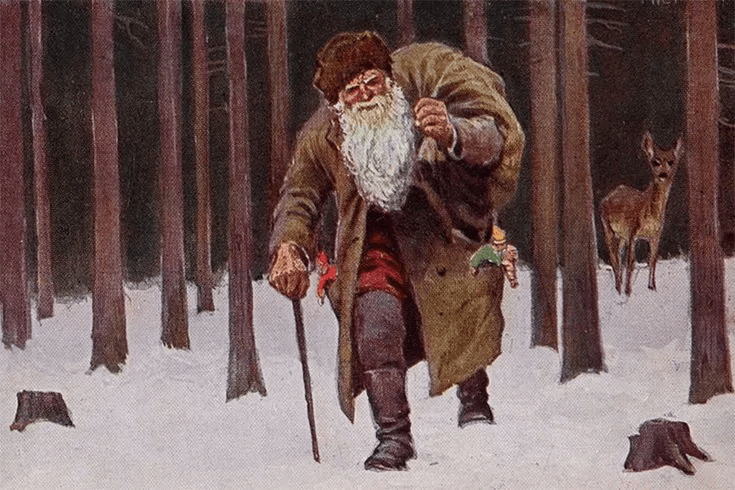
I know that might seem fucked up to some people, but for me, that was just normal. So of course I was deeply anxious whenever Knecht Ruprecht came to visit.
When I moved to Munich, I finally learned about Krampus. There’s a Krampuslauf every year, and the first time I witnessed it, I was both shocked and fascinated. They looked like demons straight from hell, creeping through the city.
What the fuck? But also: how cool! I need to know more.
Interestingly, the name Krampus almost certainly comes from the older Germanic word Krampen, meaning “claw”—which is definitely fitting for a predatory, punish-ready demon with claws and hooves.
In some Alpine and Bavarian dialects, a related form Krampn means “something lifeless, withered, or shrivelled.”
Interesting, eh?
A little fun fact: my dark fantasy, folklore-inspired short film Butzemann was hugely inspired by Krampus’s look, and the monster in the film actually wears an old wooden Krampus mask.
As you can see, everything is connected.
My Version of Krampus
In my novella The Wild Hunt, Martha meets an old, exhausted Krampus while she’s attempting some illegal and weird shit (as she does) in the English Garden, a huge park in Munich. Actually, she doesn’t really meet him. She gets hunted down by him until she finally realises who he is.
For me, it was important to look behind the grim, monstrous façade of Krampus and see how hurt and exhausted he truly is. He’s one of the first glimpses into the larger folkloric and fairytale world of my series, and a prime example of how stories and legends can fuck up the creatures bound to them.
Because in my books, here’s the twist: as a being from folklore or fairytales, you are bound to the words that created you. You’re trapped within them, forced to behave the way people expect, or you suffer.
I guess, my German upbringing is showing: Be nice and behave as expected, or you get punished.
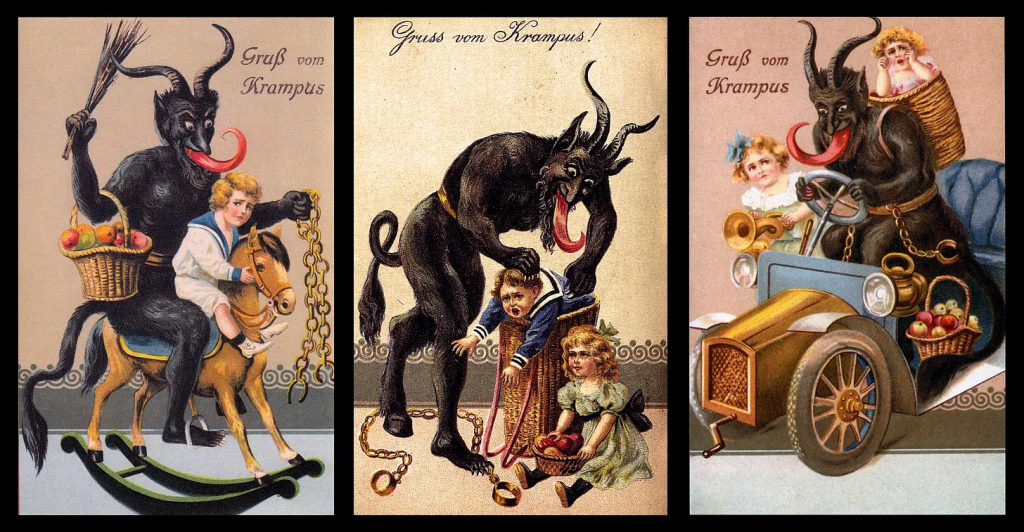
The sad truth for Krampus is that he doesn’t want to do his job anymore. He’s exhausted. He wants peace. After years of dragging kids down to hell, he’s realised he can’t stomach it any longer. So he seeks out Martha for help.
As Krampus begins questioning why he must punish children—and by whose rules—he becomes desperate to free himself from his fated myth. But to make this happen, they need some very powerful help.
A Menacing Monster or a Sad, Broken Creature?
So, yeah, Krampus in my story is a sad, broken monster who longs for rest but is trapped in his own myth. I’ve always been fascinated by questioning stories and legends. I constantly ask myself: who wrote this, and why?
The idea that you could be trapped in your own story is incredibly intriguing to me. I mean, aren’t we all somehow trapped in the stories we tell ourselves. Or the ones others tell about us?
As a woman, for example, I’m constantly confronted with stories of the “perfect” or “evil” woman, with expectations that society or my environment push onto me.
So why not explore that concept through monsters, and through a formerly evil witch who’s now trying her best to be good?
If you want to vote for the next month’s monster, you can do that on my Substack post. But the poll is only open for a week, so head over there quickly:
Find out more about Martha Oak Adventures here.
 Jule Jessenberger
Leave a comment